
Premium & Bare Root Seedlings Wholesale
Wholesale bare-root seedlings are graded to the appropriate height for your needs and are widely available at Native Forest Nursery. The height grades we have available are 18-24", 2-3', and 3-4'. We also can grade 6-12" and 12-18" for hickories’ seedlings and special orders outside of our standard grades.

Species We Grow
Native Forest Nursery grows a broad selection of eastern U.S. native species as bare root seedlings, all field-grown in Georgia under rigorous quality standards. Each species below is harvested dormant, graded by height, and shipped at the optimal time for successful establishment.
- Bald Cypress (Taxodium distichum) — A signature wetland species tolerant of prolonged flooding and drought once established. Ideal for riparian buffers, floodplain restoration, and wet retention areas.
- Eastern Red Cedar (Juniperus virginiana) — One of the most adaptable natives in the eastern U.S. Widely used for windbreaks, wildlife habitat, and revegetation of disturbed upland sites.
- Tulip Poplar (Liriodendron tulipifera) — A fast-growing hardwood favored for reforestation projects, carbon sequestration plantings, and high-quality timber production.
- Willow Oak (Quercus phellos) — A bottomland oak that produces abundant acorns for waterfowl and deer. Excellent choice for streamside plantings and NRCS-funded wildlife habitat programs.
- Swamp White Oak (Quercus bicolor) — Tolerates seasonally wet soils and compaction. A premium mast-producing species for wetland edges and floodplain corridors.
- Hazelnut (Corylus americana) — A native shrub that provides dense cover and protein-rich nuts for deer, turkeys, and small mammals. Widely used in NRCS CP33 habitat plantings.
- Buttonbush (Cephalanthus occidentalis) — A wetland shrub that thrives in standing water, offering both bank stabilization and critical nectar resources for pollinators and waterfowl.
- Sycamore (Platanus occidentalis) — A large-canopy riparian tree that anchors stream banks and provides important cavity habitat for wood ducks and other cavity-nesting species.
- River Birch (Betula nigra) — One of the best natives for streambank stabilization. Fast-growing, flood-tolerant, and widely specified in Army Corps of Engineers and NRCS restoration plans.
- Black Willow (Salix nigra) — The fastest-rooting native willow for erosion control. Commonly planted as bare root seedlings or live stakes along stream banks and drainage channels.
Sizing and Grading
Our bare root seedlings are available in standard height grades: 6-12 inches, 12-18 inches, and 18-24 inches, depending on species and season. Plants are graded by caliper and height to ensure uniform, plantable stock — not undersized culls.
Wholesale orders are bundled in counts of 25 or 50 per species, with minimum order quantities that vary by season. Contact us for current availability and pricing; our stock sells out early in peak planting windows, so early orders are strongly encouraged.
Ideal Use Cases for Bare Root Seedlings
Bare root native seedlings are the most cost-effective planting stock for large-scale restoration. They establish quickly when planted during dormancy and are easy to handle and transport without heavy nursery equipment. Common project types include:
- Stream bank and wetland restoration — Riparian species like Black Willow, River Birch, and Bald Cypress are workhorses for stabilizing eroding banks and restoring wetland hydrology.
- NRCS and government conservation programs — Native Forest Nursery is a trusted supplier for NRCS EQIP, WRP, and other federal cost-share programs. We work regularly with landowners, wildlife biologists, and project engineers who need guaranteed stock quantities and consistent quality.
- Reforestation and afforestation projects — Whether replanting a harvested timber tract or establishing a new woodland from open ground, our seedlings are sized and graded for high-volume mechanical or hand planting.
- Wildlife habitat enhancement — Mast-producing oaks, native shrubs, and fruit-bearing species transform marginal land into productive wildlife habitat for deer, turkey, waterfowl, and pollinators.
- Erosion control — Fast-rooting species including willows, sycamore, and river birch are planted by the thousands along drainage channels, road cuts, and disturbed slopes.
Frequently Asked Questions
When do you ship bare root seedlings?
We ship bare root seedlings during the dormant season, typically from late November through early March depending on species and weather conditions. Orders placed outside the shipping window are held for the next available season.
What is your minimum wholesale order?
Minimum orders vary by species and are set each season based on available inventory. Contact us directly for current pricing sheets and minimums — we work with projects of all sizes, from small landowner plantings to large-scale federal restoration contracts.
How should I store seedlings before planting?
If you cannot plant immediately upon arrival, keep seedlings in a cool, shaded location with roots moist (not submerged). Heal-in storage in moist sawdust or soil works well for short-term holding. Do not allow roots to dry out or freeze after delivery.
What survival rates can I expect?
Under proper planting conditions — dormant stock, adequate soil moisture, appropriate site preparation — bare root native seedlings typically achieve 80-95% first-year survival. Survival rates are heavily influenced by site conditions, planting timing, and weed competition management.
Do you ship nationwide?
Native Forest Nursery ships wholesale orders across the eastern United States, from New York to Texas. We do not currently ship to western states. Contact us to confirm availability for your state and project specifications.
Seedling Production.
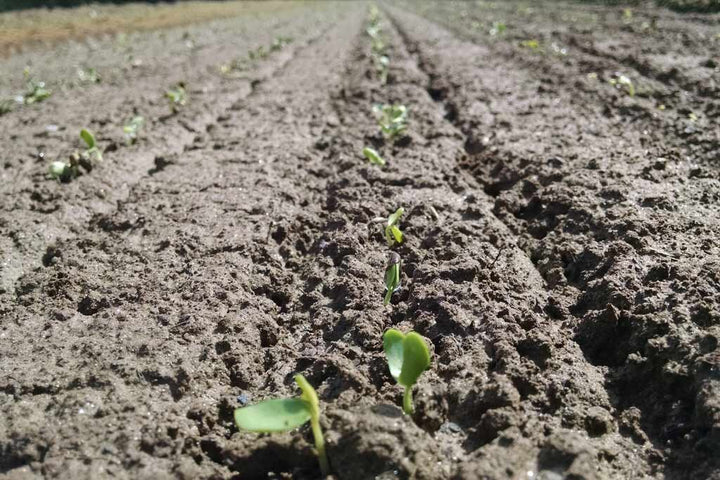
We produce over 5 million hardwood bulk tree seedlings and over 2 million pine seedlings every year. Our wholesale tree seedlings are comprised of over 100 different native species that are used for a variety of purposes. Some go to nurseries as liner stock while the majority go to reforestation, reclamation, mitigation and other projects.

Conservation Seedlings.
Conservation Grade Seedlings are lifted and packaged as bed run. These bulk tree seedlings typically average 12” to 18” stem height with an average 8” root length. Our wholesale conservation tree seedlings’ heights and root lengths may vary by species.

Premium Seedlings.
Premium Seedlings are graded to a specific stem height class starting at 18". Available grades height grades are 18-24", 2-3', and 3-4'. We do grade 6-12" and 12-18" seedlings for hickories and for special orders outside of our standard grades. Our wholesale premium bulk tree seedlings are graded to the appropriate height for your needs.